You did everything right. You researched laser providers, showed up for your sessions, and followed all the recommended instructions. Yet, instead of smooth skin, you’re noticing hair that is coarser, darker, and more abundant than before you started.
You’re not imagining it. This is a real, documented phenomenon called Paradoxical Hypertrichosis, that’s far more common than the laser industry openly admits.
What Is Paradoxical Hypertrichosis?
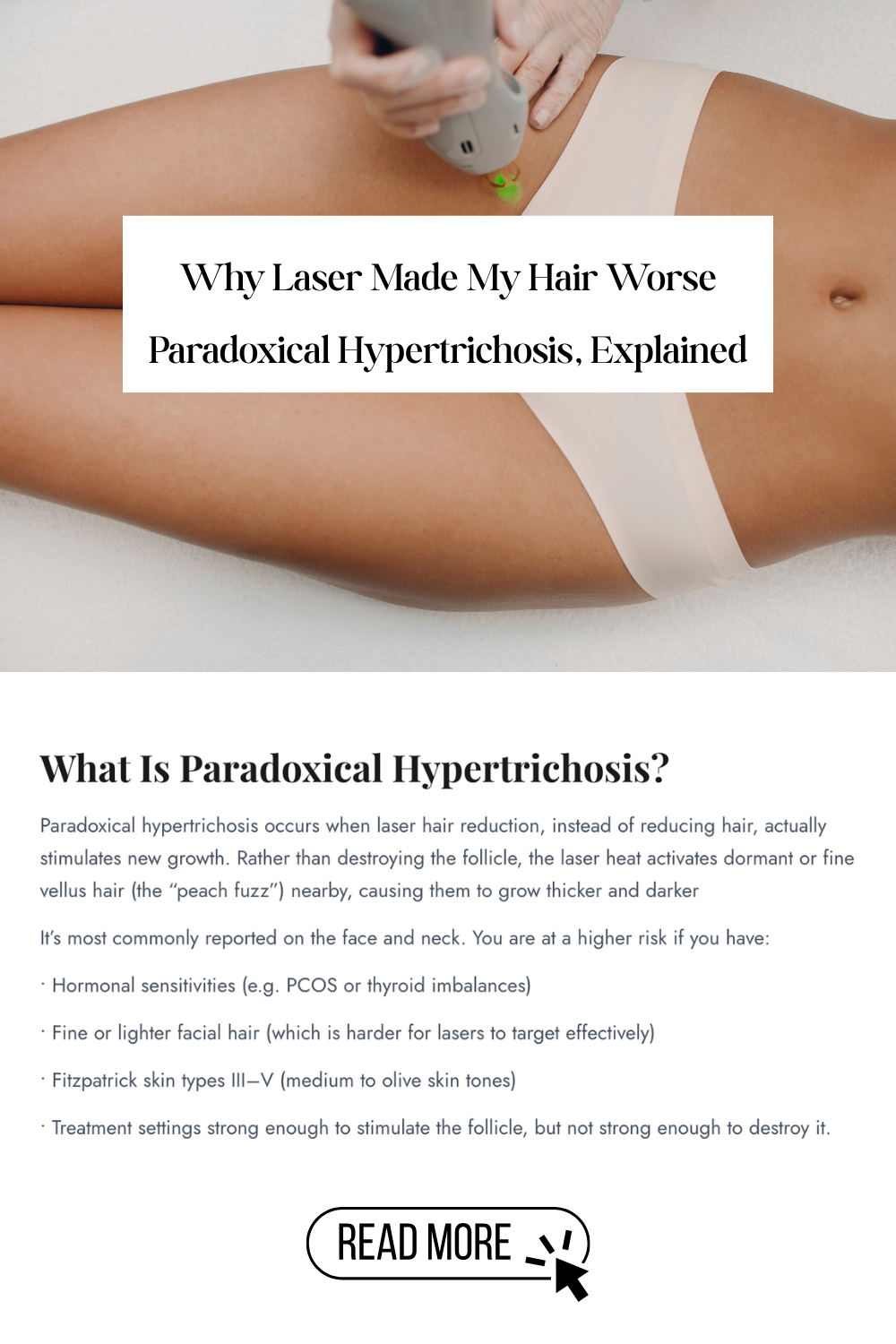
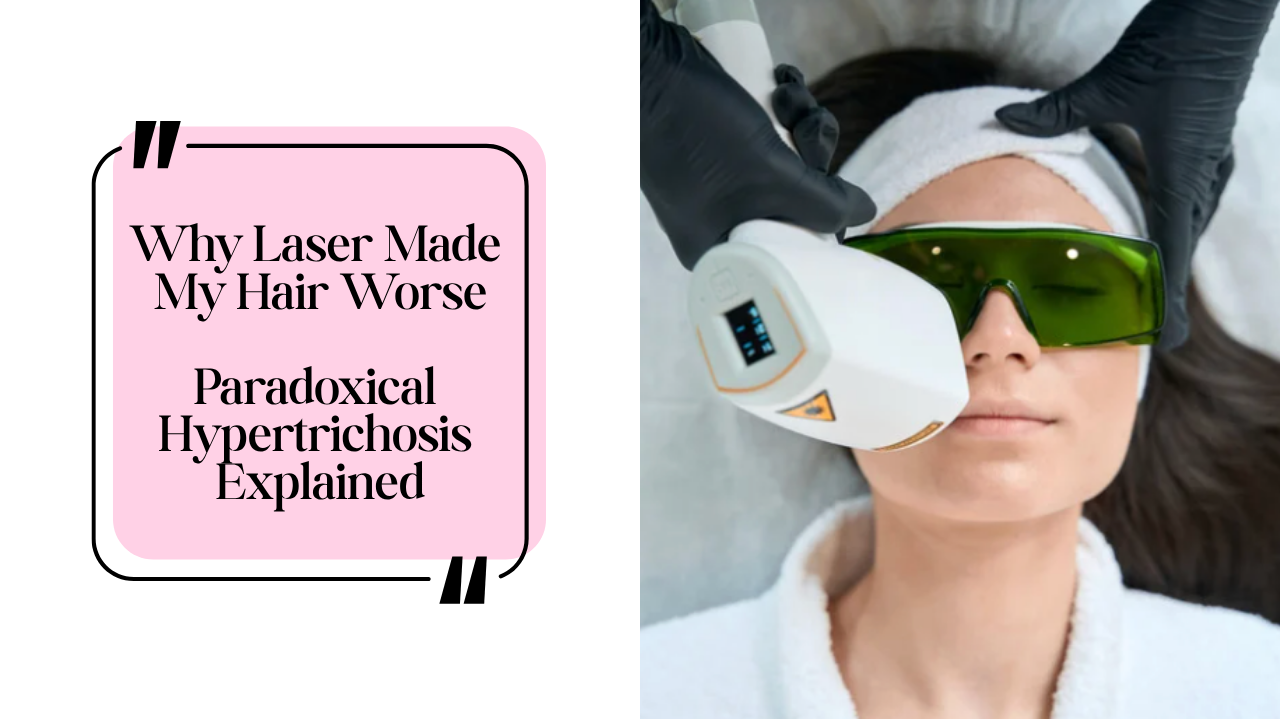
Paradoxical hypertrichosis occurs when laser hair reduction, instead of reducing hair, actually stimulates new growth. Rather than destroying the follicle, the laser heat activates dormant or fine vellus hair (the “peach fuzz”) nearby, causing them to grow thicker and darker
It’s most commonly reported on the face and neck. You are at a higher risk if you have:
• Hormonal sensitivities (e.g. PCOS or thyroid imbalances)
• Fine or lighter facial hair (which is harder for lasers to target effectively)
• Fitzpatrick skin types III–V (medium to olive skin tones)
• Treatment settings strong enough to stimulate the follicle, but not strong enough to destroy it.
Why Does It Happen?
The exact cause isn’t fully understood, but the leading theory is: "sub-therapeutic laser exposure —energy that isn’t strong enough to destroy the follicle but enough to stimulate it — can trigger hair growth." Fine vellus hairs in the surrounding area absorb stray laser energy and may convert to terminal (thick, dark) hairs in response.
Can Electrolysis Fix It?
Absolutely. This is something I work with regularly.
Electrolysis treats each follicle individually using a tiny electrical current that destroys it at the root, permanently. Unlike laser, it doesn’t rely on pigment and won’t stimulate surrounding hairs. That means it works on every hair type, including the fine, light, or hormonally-activated hairs that laser sometimes worsens.
Clients who come to me after paradoxical hypertrichosis usually see clear, permanent results. The process takes time because we’re addressing both the original hair and whatever new growth was stimulated.
If This Happened to You
You aren't at fault, and you aren't stuck with these results. You’ve been through a frustrating cycle of "fixes" that only made the problem worse. Now, it's time to finish the job.
Written by Emily Dalton
Licensed Electrologist · Bare Hair Electrolysis, Riverton UT